Floramía
Online flower shop
ROLE
UX/UI Design
Visual Design
Branding
UX Research
GOAL
Remove the logistical barriers that make buying flowers inconvenient.
CHALLENGE
Create a structured online shop that makes a wide range of products easy to browse and discover.
Getting to know the user
Research & goals.
We started the project by conducting several interviews with our target audience: people aged 28 to 65 who enjoy flowers and tend to buy them for special occasions. We discovered that many users avoided buying flowers because of logistical barriers, such as opening hours and location.
After the interviews, we conducted a competitive audit to understand the existing market, identify competitors’ strengths, and uncover opportunities for improvement.
Based on these insights, we decided to create an online flower shop that could better meet our users’ needs.

Development journey
The design process.
We started the design process by analysing our interview findings and defining the main problem we wanted to solve.
Before working on the visual design and look and feel, we needed to establish a clear information structure.
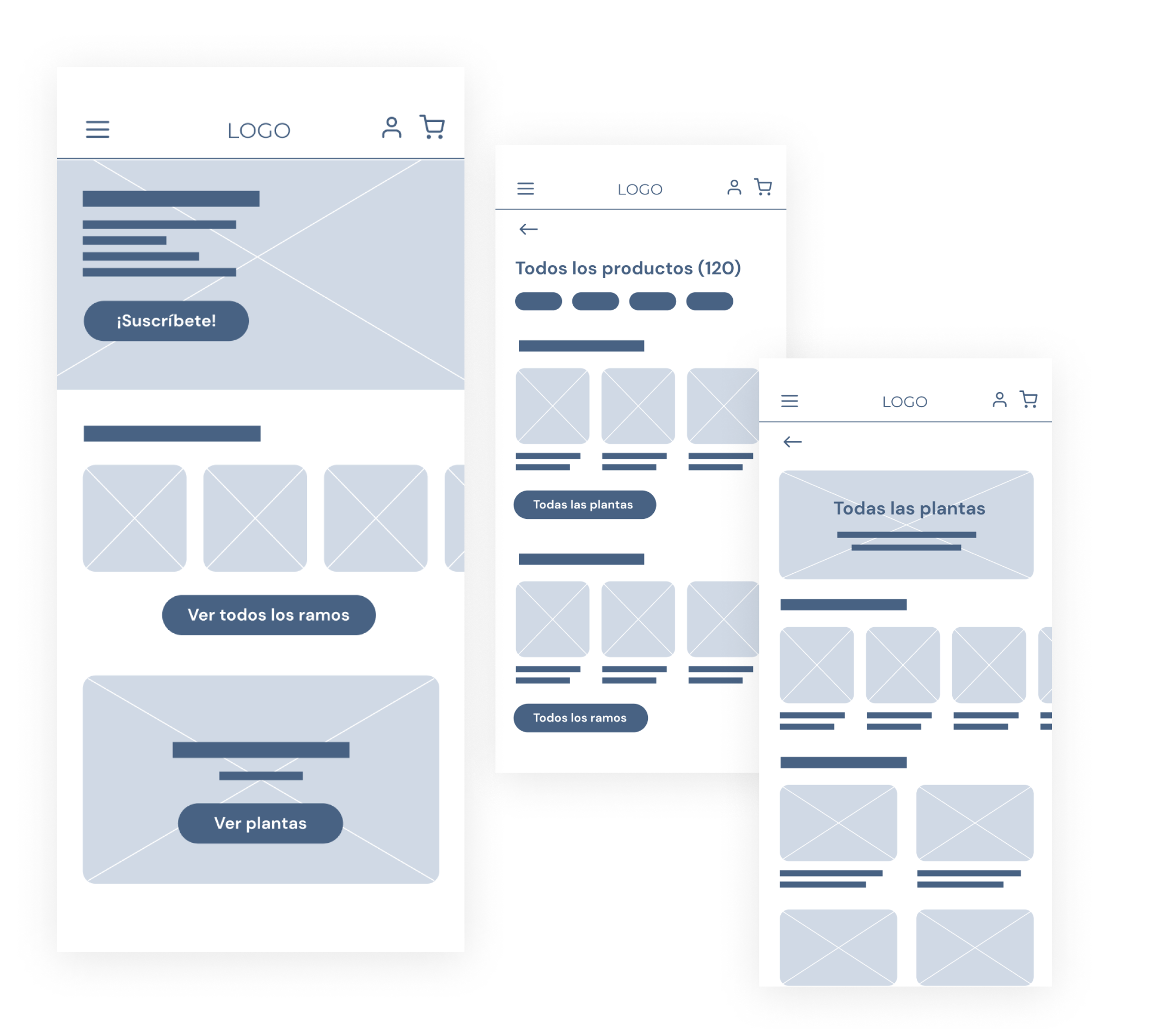
We began by sketching wireframes on paper and then translated them into digital wireframes. This gave us a solid starting point for creating our first low-fidelity prototype.
We used the low-fidelity prototype to conduct an unmoderated usability test with five participants. Although the results were generally positive, they also showed that some of our initial assumptions needed to change.
Users were not particularly interested in subscriptions. Instead, they wanted to explore the products and find them quickly. Not being able to access them easily created frustration.
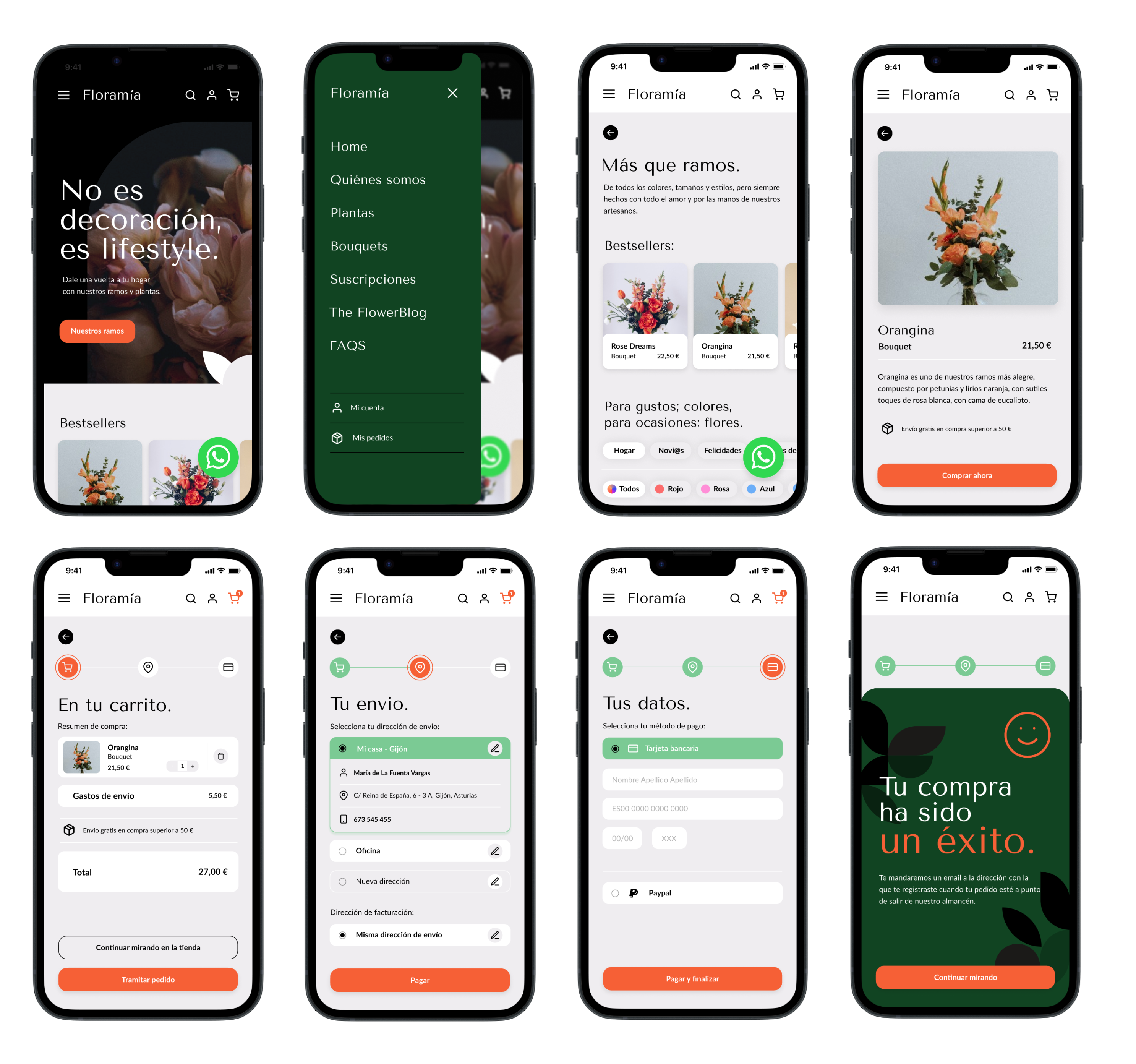
We implemented these changes and tested the flow again to make sure it worked as expected. Once validated, we created our first high-fidelity mockups to explore how the final product could look and feel.

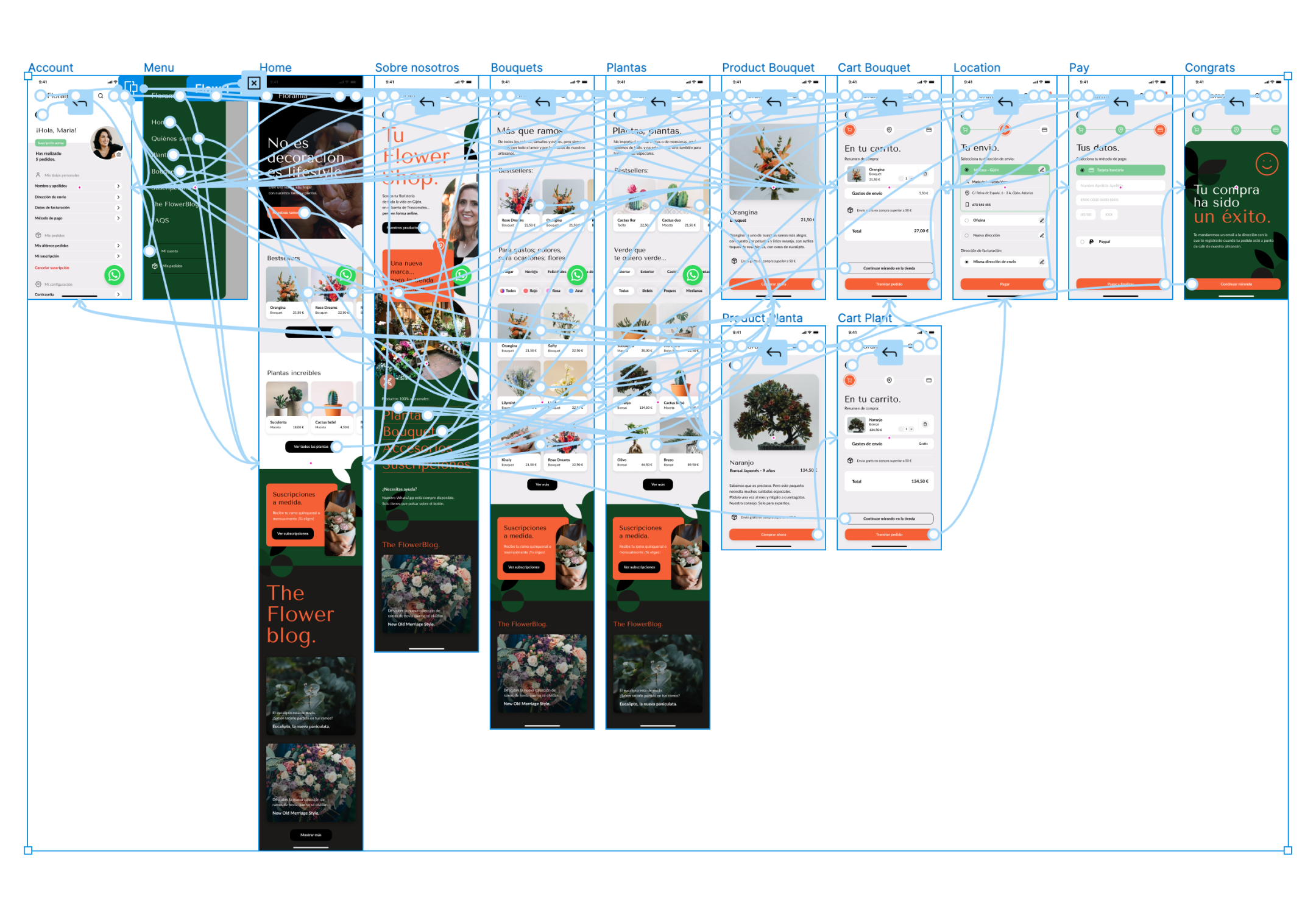
We designed all the screens needed to create a complete picture of the website and built a high-fidelity prototype with realistic interactions.
Once the prototype was ready, we conducted another usability study to validate the experience, make sure users could complete the main tasks, and assess their overall perception of the product.
Take a look
Prototype video.

Outcome.
What I learned
We achieved our initial goal while overcoming some assumptions that, at first, seemed like the right direction.
Conducting a usability test early in the process helped us identify these issues before development, potentially saving costs for the client while reducing friction for users.
Next steps
The journey of this product does not end here. The next step would be to test the product again after implementing further improvements to make the experience more accessible.
More work
Keesing B2C Local Brands
Eccomerce | Keesing Media Group
UX DESIGN /
UI DESIGN